
Conteas. A Swiss Story of Tradition and Elegance
The Origins: The Interwar Period
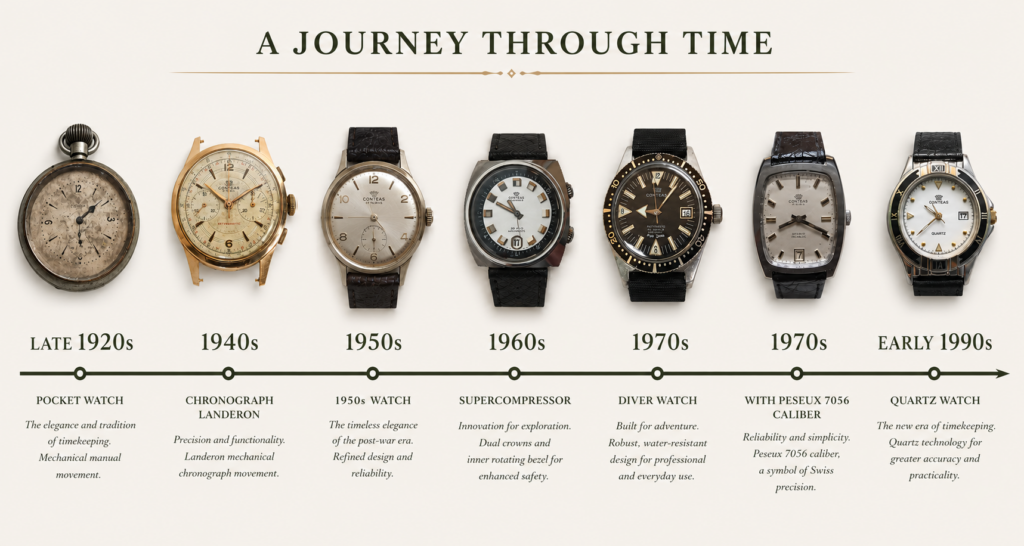
The origins of Conteas trace back to the heart of the twentieth century. The oldest known Conteas timepiece today is a large pocket watch bearing the historic crown logo and the inscription “15 Rubis”. The characteristics of its dial, the style of its hands, the pin-set time adjustment system, and the architecture of its movement suggest a production date likely in the late 1920s.
The movement belongs to the tradition of robust Swiss Roskopf-derived calibres, widely used during the period for their reliability and simple construction. Although intended for a broad audience, this early Conteas already demonstrates a clear attention to aesthetics and detail.
Even at this early stage, the elements that would define the brand for more than half a century were already present: the name CONTEAS, the crown emblem, and a constant pursuit of elegance, restraint, and legibility.
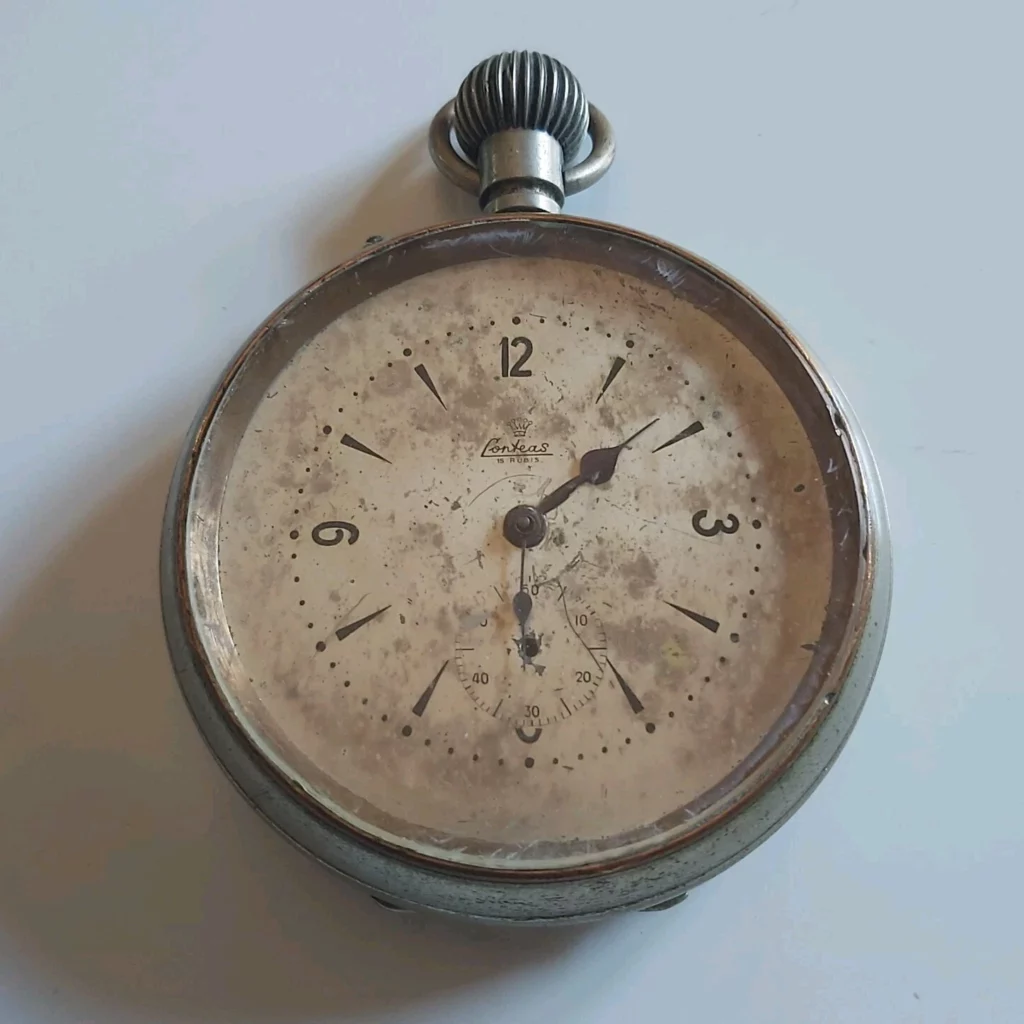
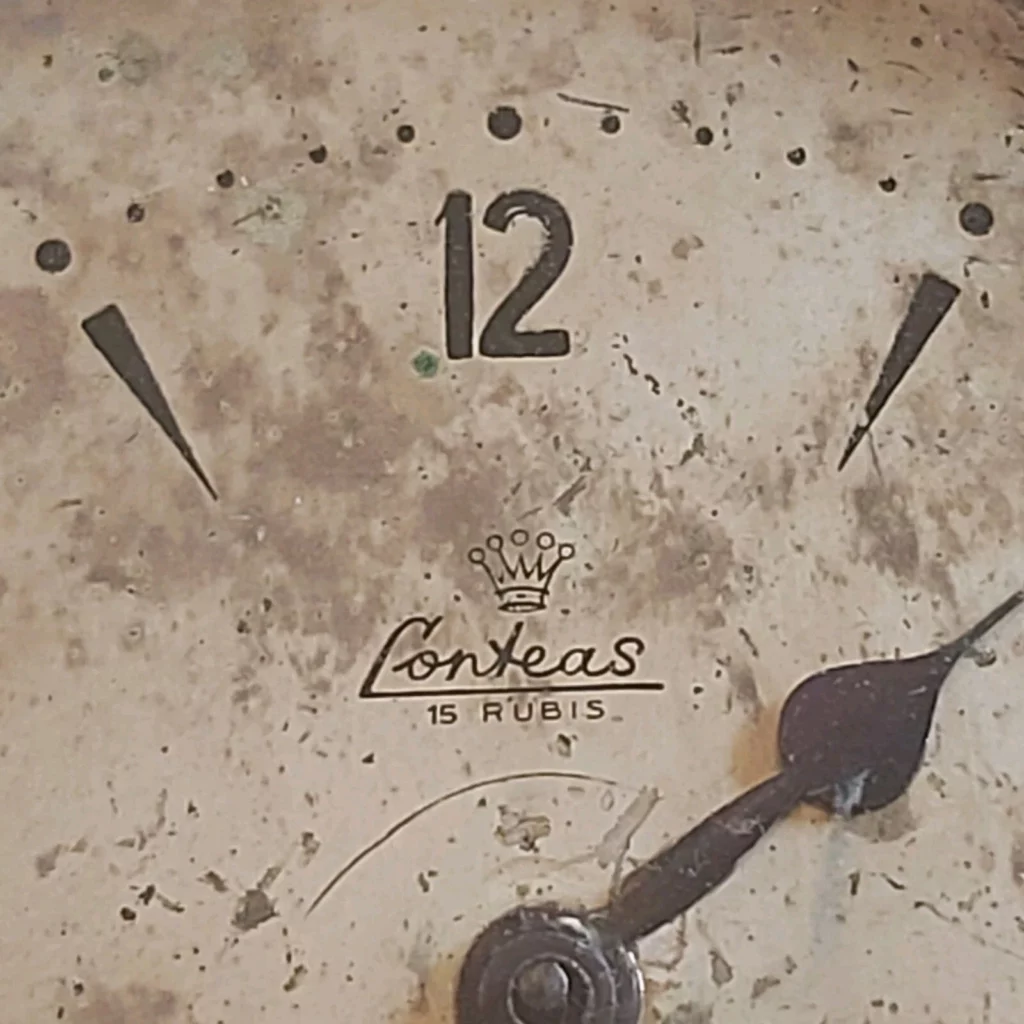
Pocket watch, circa late 1920s.
Wristwatches: The 1930s and 1940s
Like much of the European watch industry, Conteas accompanied the historic transition from pocket watches to wristwatches.
The earliest confirmed examples of Conteas wristwatches date from the late 1930s and the 1940s, a period of profound transformation for the global watchmaking industry. During these years, the brand adopted quality Swiss movements and produced chronographs powered by the renowned Landeron 48 calibre, one of the most widely used and respected chronograph movements of its era.
The introduction of chronographs reflects the brand’s ambition to expand its collection and offer increasingly sophisticated timepieces, while maintaining the philosophy of functional elegance that would accompany Conteas for decades.
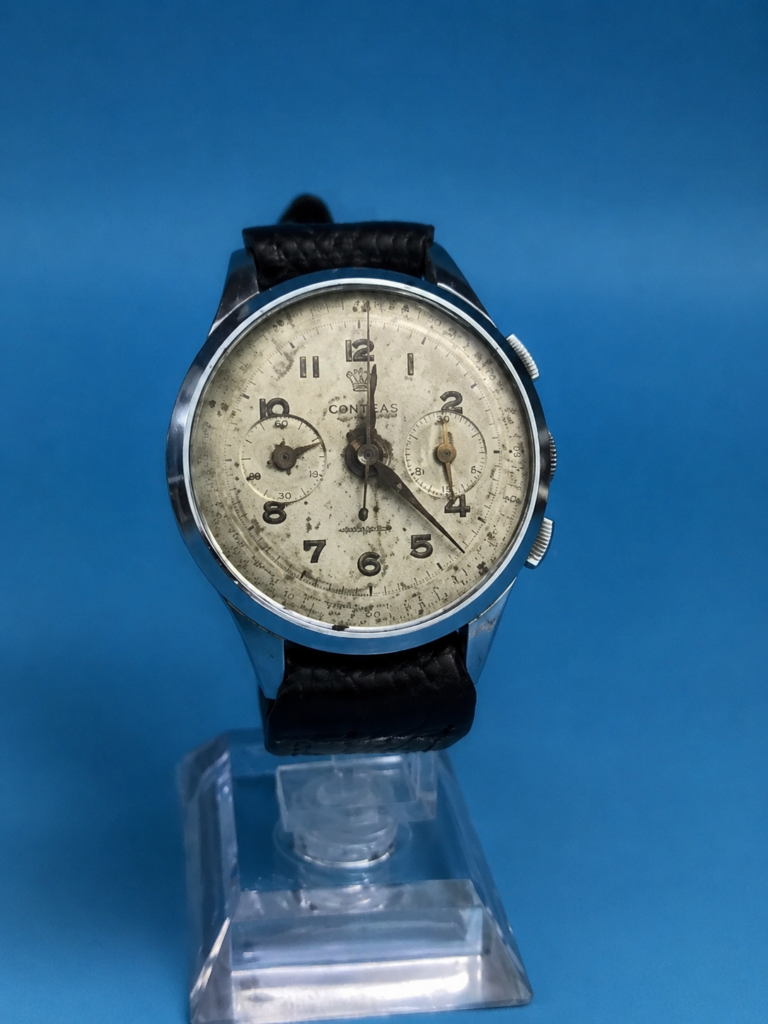
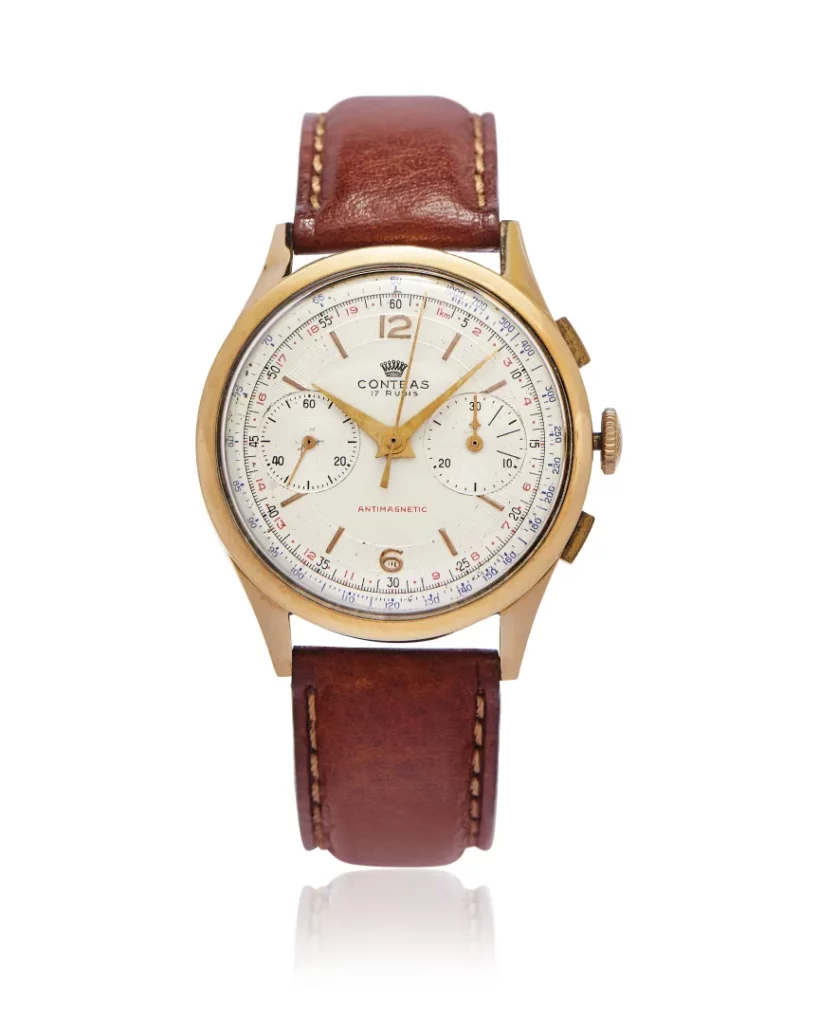
Early Conteas wristwatches and chronographs.
The Golden Age: The 1950s and 1960s
The 1950s and 1960s represent the most mature and emblematic phase of Conteas.
Surviving examples reveal a remarkably rich and coherent collection characterized by a continuous pursuit of elegance. The 1950s were dominated by refined and understated small-seconds watches, perfectly aligned with post-war tastes.
With the arrival of the 1960s, the collection expanded further. Alongside classic dress watches with central seconds, more versatile and sporty models appeared, including the brand’s first diver watches. While following market trends, Conteas maintained a distinctive stylistic identity defined by balanced proportions, clean dials, and a strong focus on everyday wearability.
During this period, the brand positioned itself within the segment of quality Swiss commercial watchmaking, offering reliable products equipped with Swiss movements supplied by respected manufacturers such as ETA, Peseux and other important players in the Swiss watch industry.
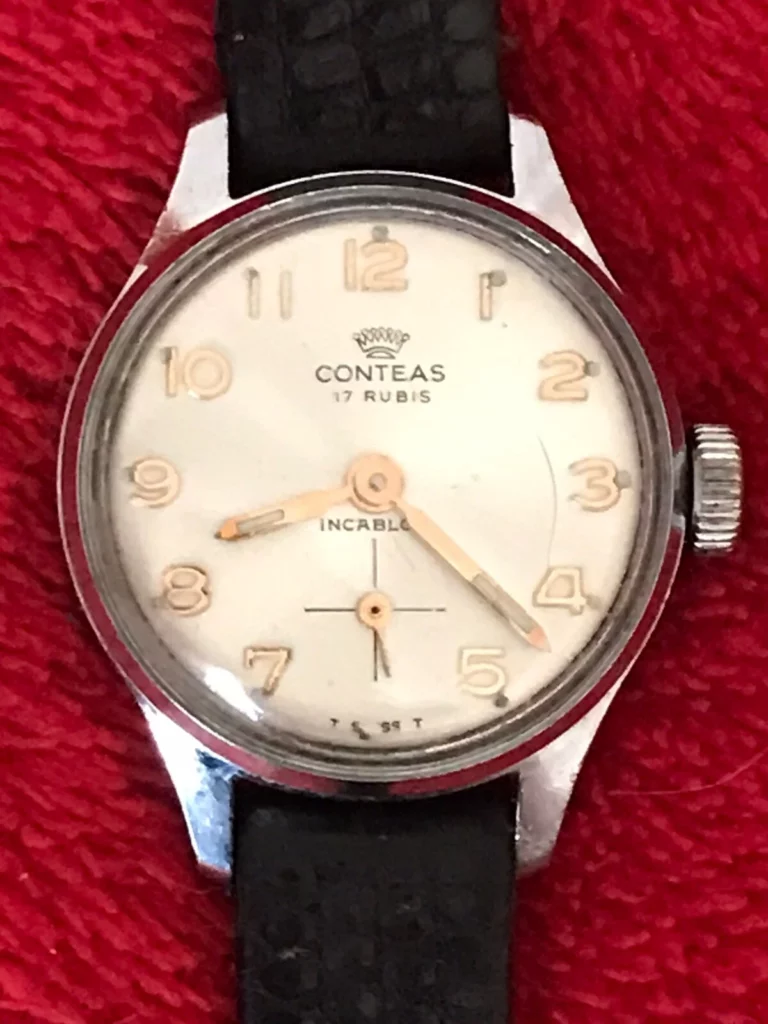
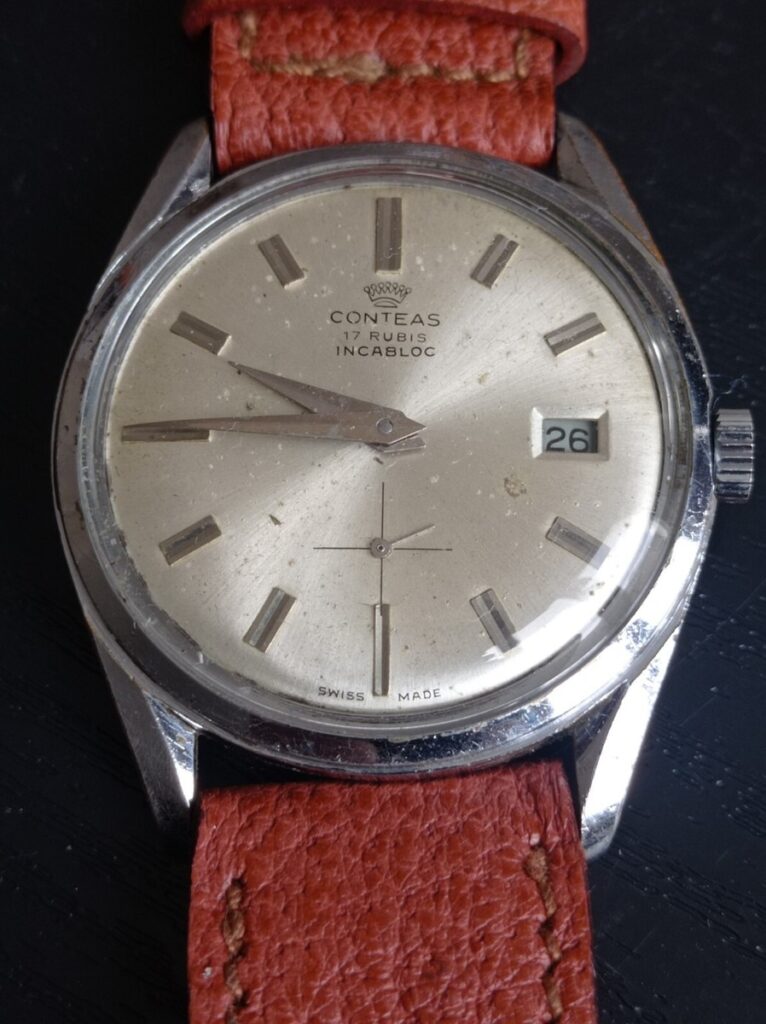
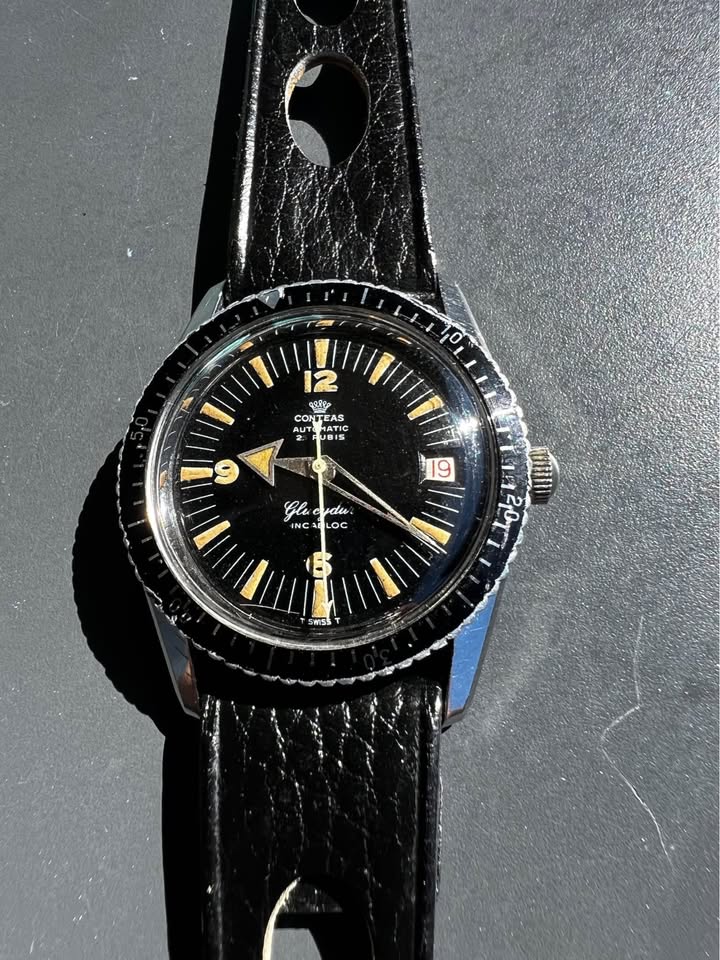
Representative dress watches from the post-war period.
Consolidation: The 1970s
The 1970s marked a period of great creativity.
As the international watch industry experimented with new shapes, materials, and aesthetic concepts, Conteas participated with an exceptionally diverse collection. Alongside its traditional elegant models, the brand continued to offer diver watches and sporty timepieces while introducing cushion cases, tonneau cases, geometric designs, and bolder stylistic expressions.
This was the era of automatic watches with date and day-date complications, colorful dials, and designs influenced by the industrial aesthetics of the decade. While embracing contemporary trends, Conteas always preserved its distinctive character: a balance between elegance and practicality, never giving in to excess.
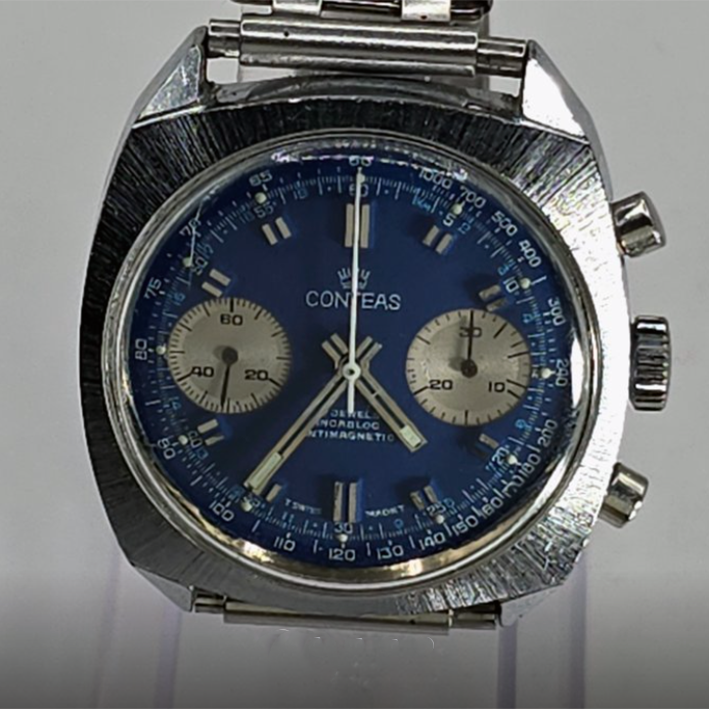
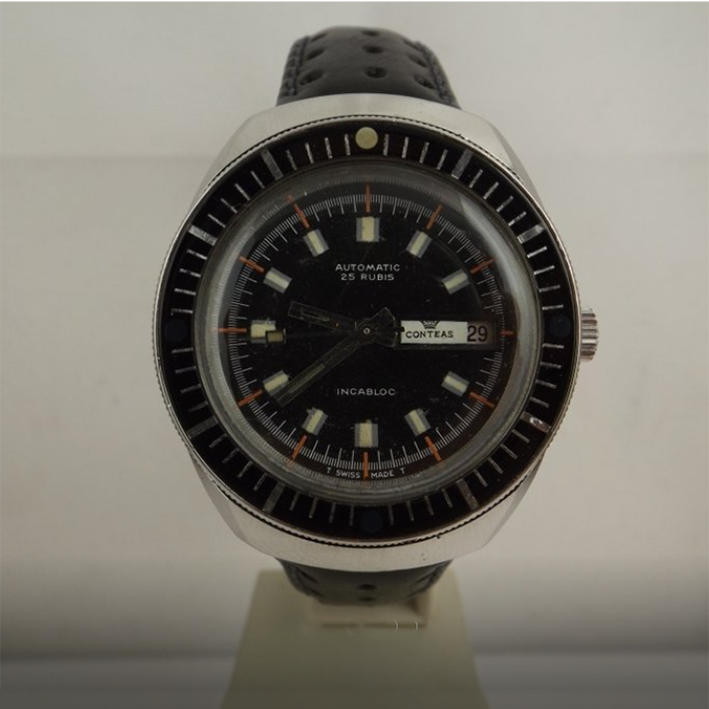
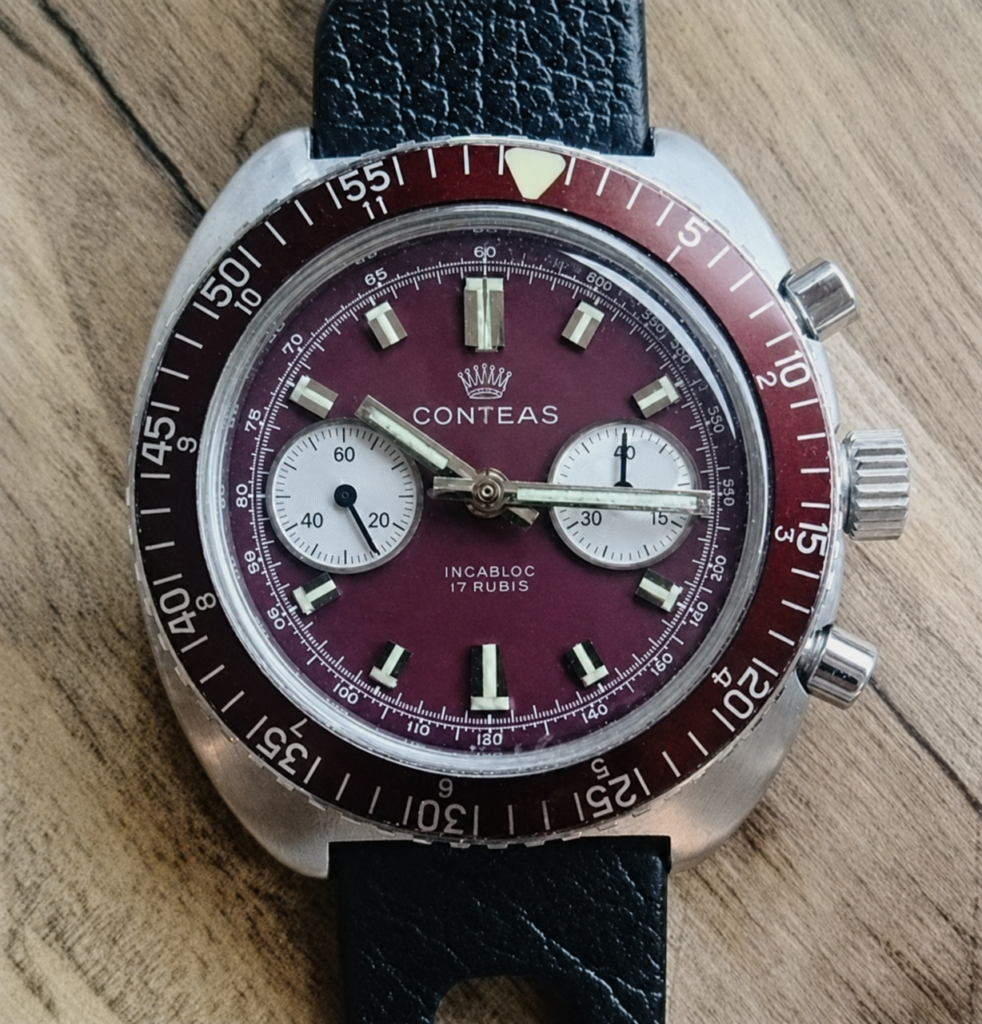
Diversification of the collection, including dress and sport models.
The Quartz Crisis: The 1980s
Between the late 1970s and the early 1980s, the entire Swiss watch industry was shaken by the quartz revolution.
Many historic brands failed to survive this transformation. Conteas, however, demonstrated a remarkable ability to adapt. Alongside its final automatic models, numerous quartz watches appeared, both sporty and elegant, aimed at a clientele increasingly attracted by the precision and convenience offered by new technology.
The watches of this period reflect international trends, featuring two-tone cases, sport-inspired bezels, and new aesthetic languages that came to define the 1980s.
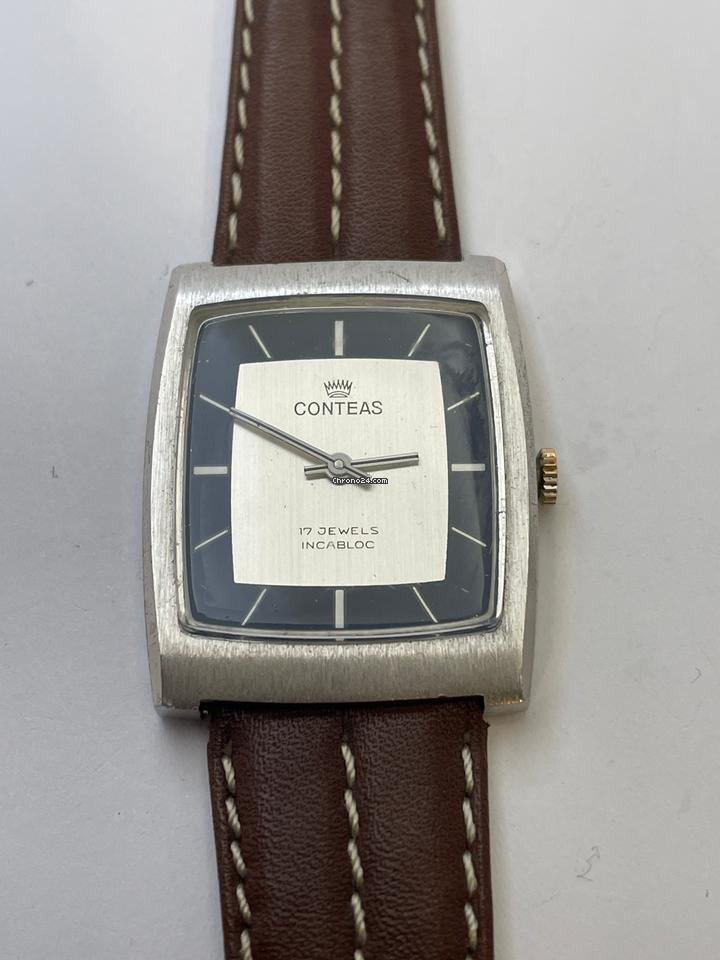
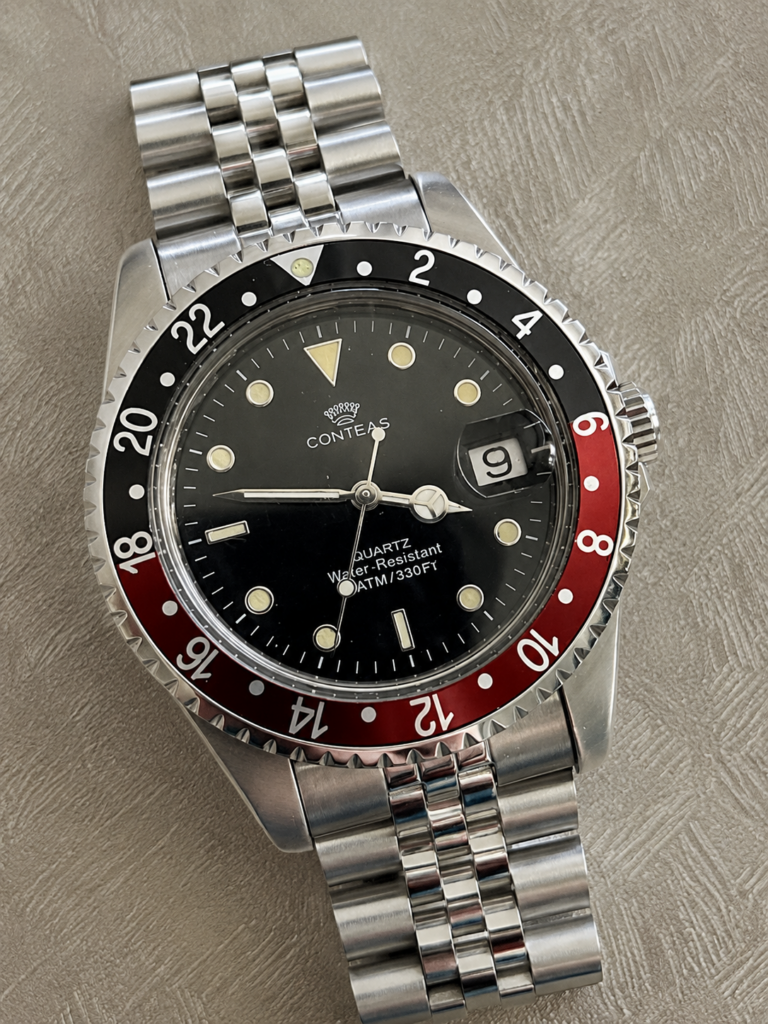
Mechanical and quartz examples from the transition era.
The Final Years: The 1990s
The most recent known examples appear to date from the late 1980s and early 1990s.
Several quartz models display stylistic characteristics typical of the period, suggesting that the brand remained active at least into the early 1990s. During this final phase, Conteas continued to offer elegant and accessible Swiss watches while preserving its identity in a market that had changed dramatically from the one in which the brand was born.
The brand subsequently faded from the commercial landscape, leaving behind a history spanning more than half a century.
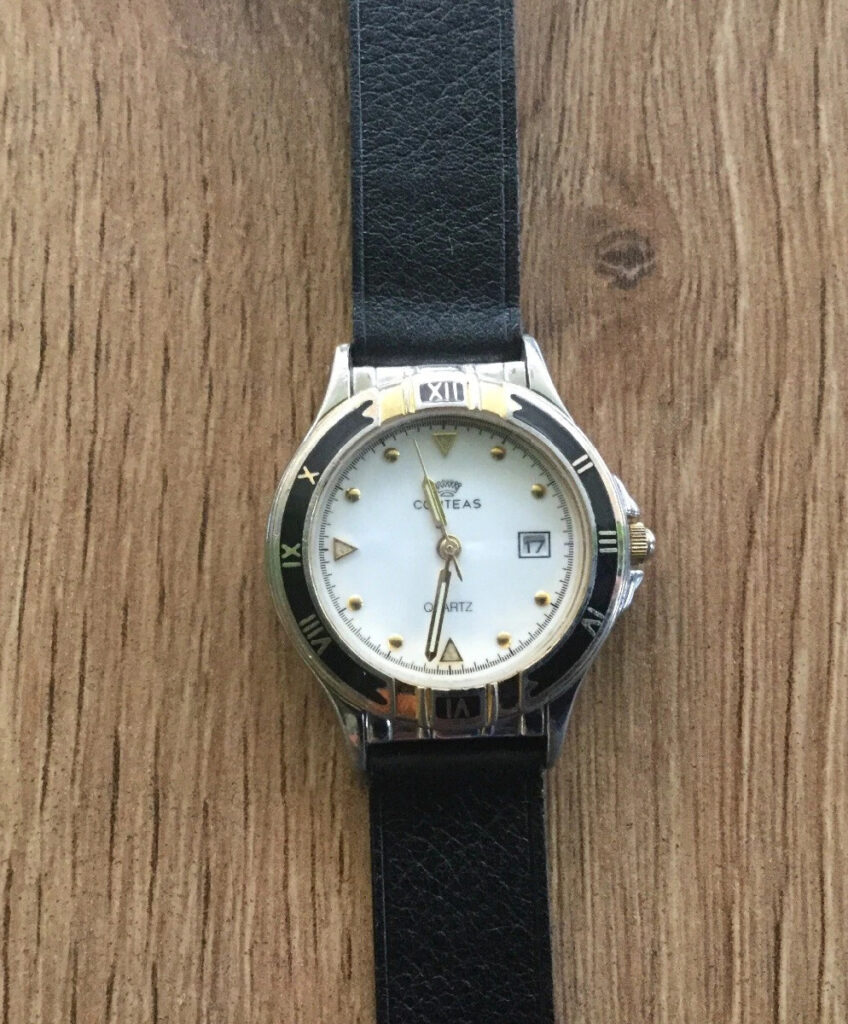
One of the latest known Conteas watches.
The Legacy of Conteas
Although the historical documentation available today remains fragmentary, surviving examples tell the story of an authentic Swiss watch brand that accompanied much of the twentieth century.
From the large pocket watches of the interwar years to the chronographs of the 1940s, from the elegant post-war dress watches to the automatic models of the 1970s and the final quartz watches of the early 1990s, Conteas followed the evolution of Swiss watchmaking for more than sixty years.
An independent brand that built its identity through a constant commitment to reliability, elegance, and Swiss tradition.
Today, that story continues with a new generation of timepieces inspired by the same values that guided the brand throughout the twentieth century: restraint, quality, and timeless taste.
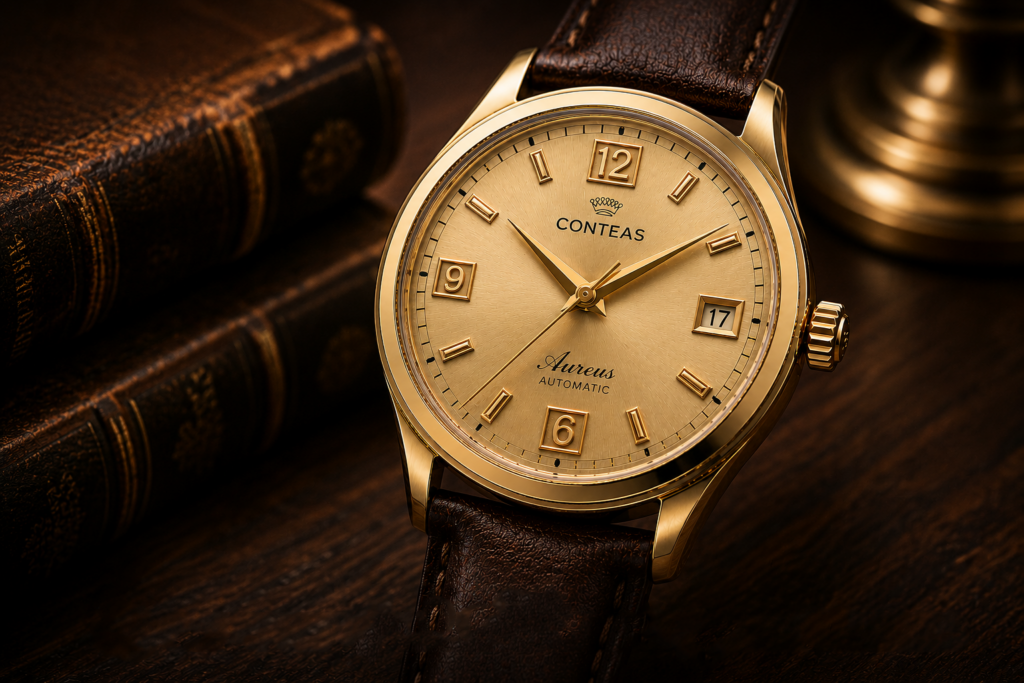
This is not a recreation of the past.
It is a new chapter in Swiss watchmaking.
The watches presented here represent the oldest documented examples currently known.
The historical archive remains incomplete, and new discoveries continue to emerge.