
The House of Conteas
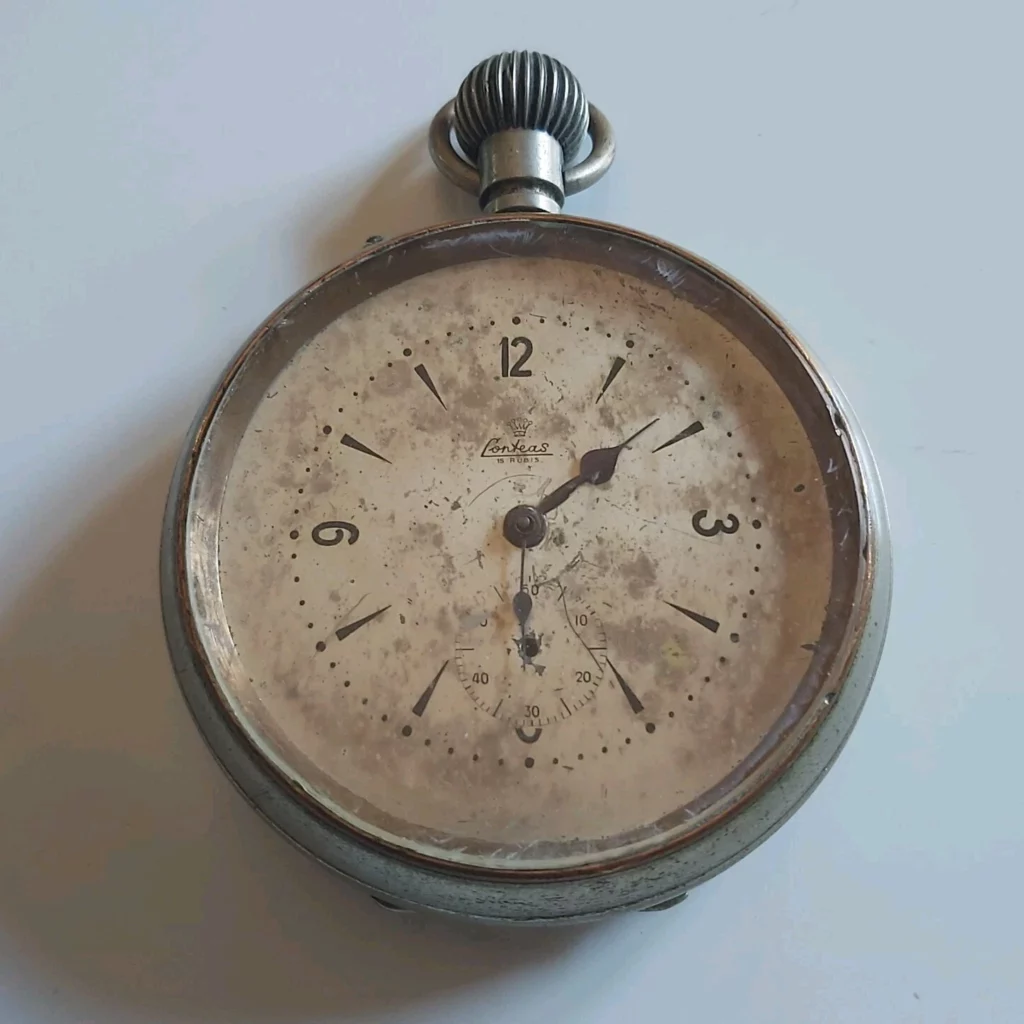
The Earliest Known Conteas
The earliest Conteas timepiece documented so far is an unusually large pocket watch bearing the crown emblem and the inscription “15 Rubis”.
Its exact date remains uncertain. Earlier research suggested a possible interwar origin, but subsequent examination of the case, movement and construction has led to a more cautious interpretation. The watch may instead date from the years immediately following the Second World War, possibly around 1946–1948, while its Roskopf-derived movement could itself be older.
Until documentary evidence or a comparable dated example emerges, this pocket watch should therefore be regarded as the earliest known Conteas rather than as proof of the precise date on which the brand was founded.
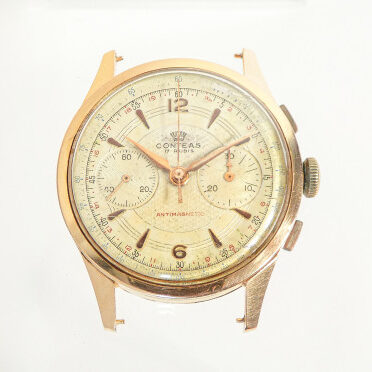
The Early Wristwatches: 1940s
Among the earliest wristwatches documented so far are several Conteas chronographs equipped with Landeron movements, including examples using the Landeron 48.
Their construction and stylistic features are consistent with the 1940s, and some may pre-date the establishment in 1950 of the Turin business later associated with Carlo Eskenazi.
Whether this indicates that the Conteas name was already in use before 1950, or reflects another commercial arrangement that has yet to be identified, remains one of the central questions of the research.
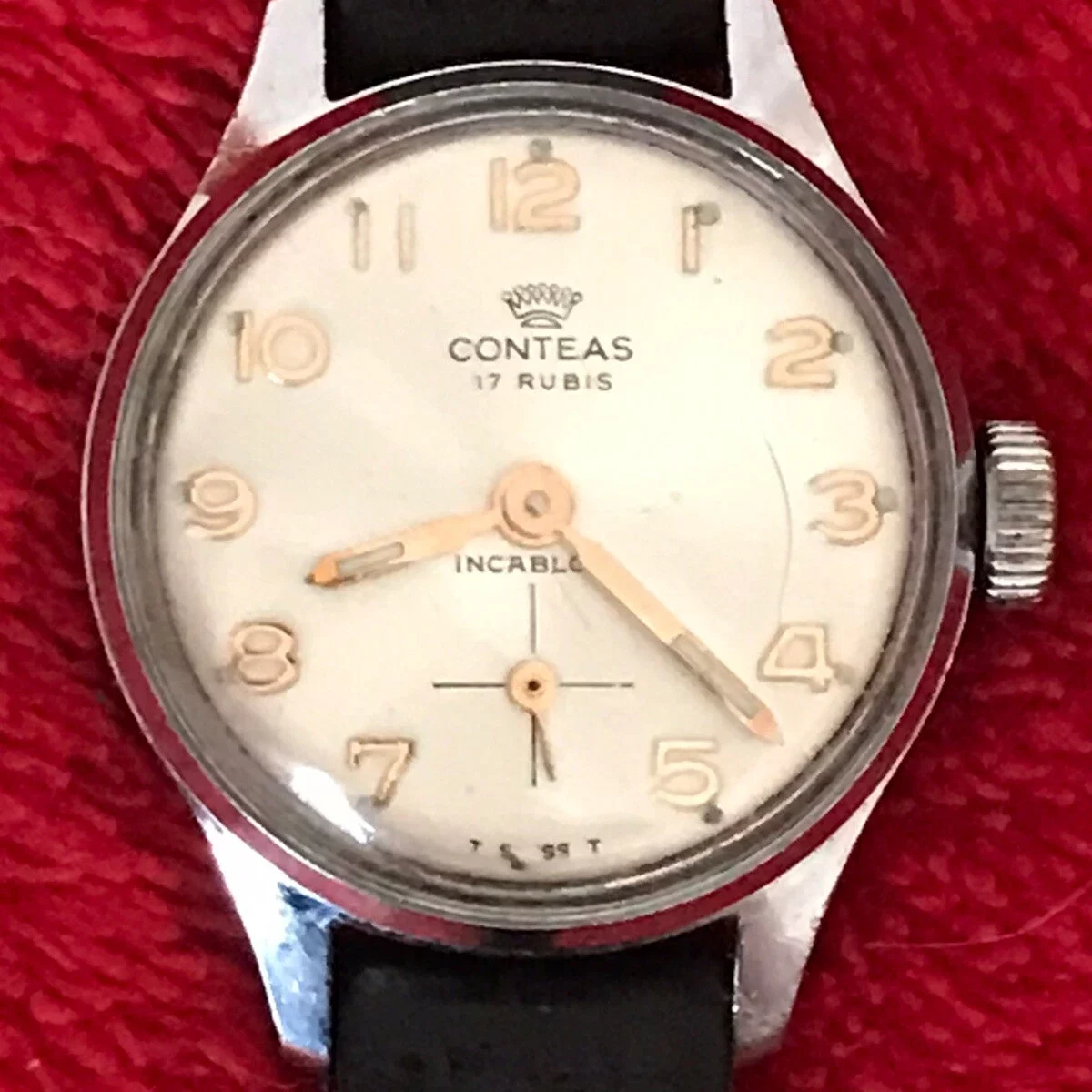
The Golden Age: The 1950s and 1960s
The 1950s and 1960s represent the most mature and emblematic phase of Conteas. Surviving examples reveal a broad and relatively coherent range, with a recurring preference for restrained, elegant designs. The 1950s were dominated by refined small-seconds watches, closely aligned with post-war tastes.
With the arrival of the 1960s, the range expanded further. Alongside classic dress watches with central seconds, more versatile and sporty models appeared, including some of the earliest known Conteas diver watches. Surviving examples nevertheless show recurring stylistic traits, including balanced proportions, clean dials and practical everyday designs.
During this period, Conteas operated within the commercial world of Swiss-made watchmaking, using movements supplied by established Swiss manufacturers including A. Schild, ETA, FHF, FEF, Unitas, Peseux and Landeron, depending on the period and model.
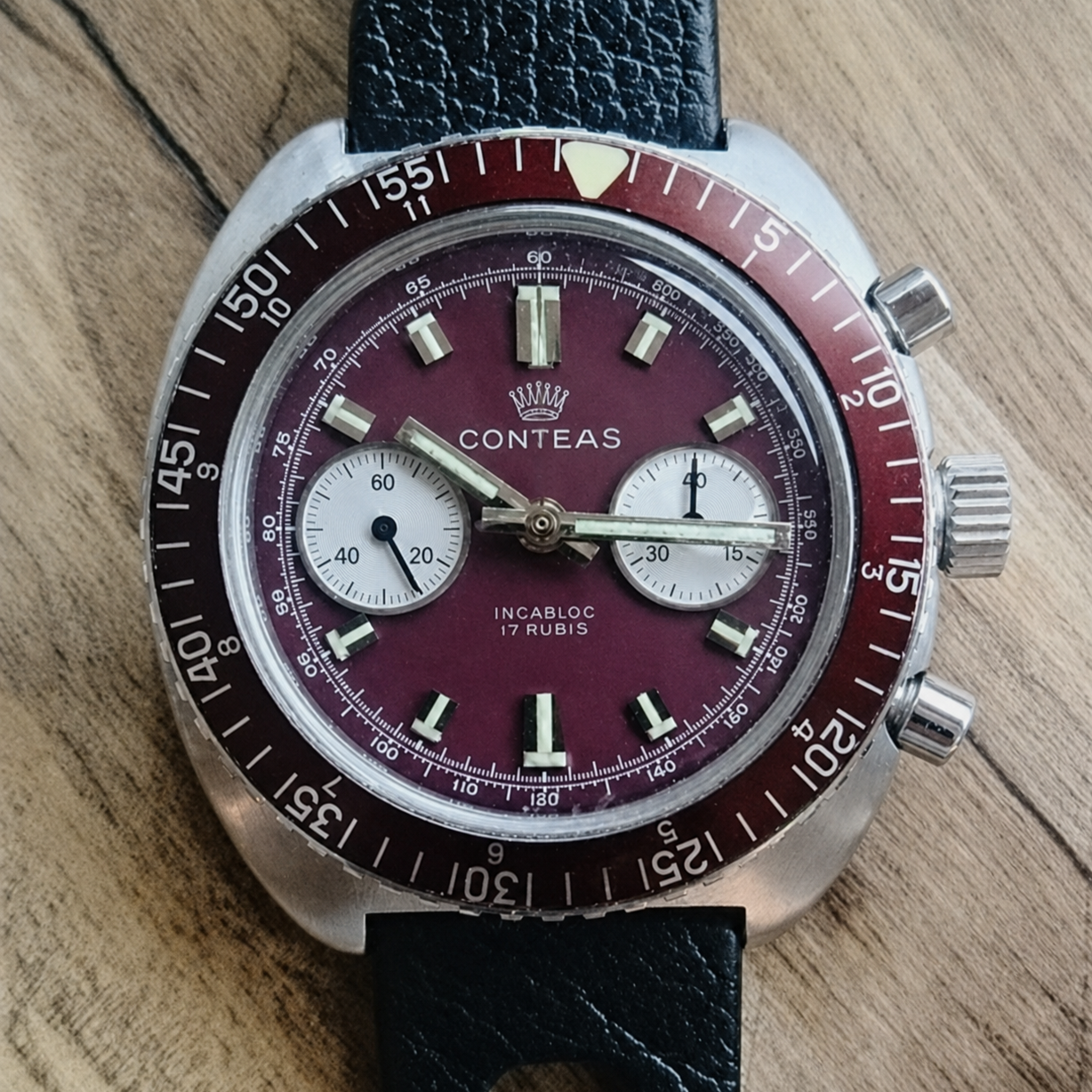
Consolidation: The 1970s
The 1970s marked a period of great creativity.
As the international watch industry experimented with new shapes, materials, and aesthetic concepts, Conteas participated with an exceptionally diverse collection. Alongside its traditional elegant models, the brand continued to offer diver watches and sporty timepieces while introducing cushion cases, tonneau cases, geometric designs, and bolder stylistic expressions.
This was the era of automatic watches with date and day-date complications, colorful dials, and designs influenced by the industrial aesthetics of the decade. Despite the stylistic experimentation of the period, many surviving examples retained balanced proportions and relatively restrained dial layouts.
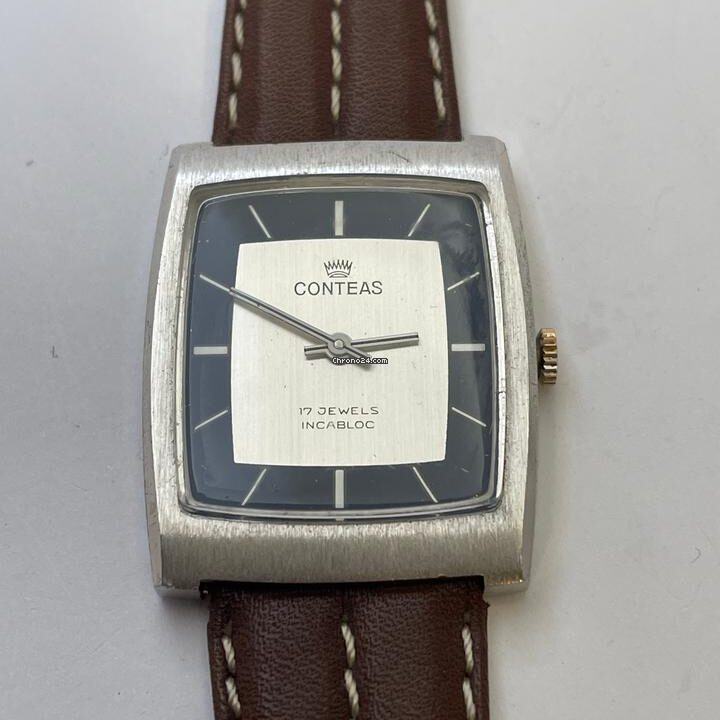
The 1980s: Mechanical Watches, Quartz and an Open Question
Conteas watches continued to appear during the 1980s, including both mechanical and quartz models. One of the latest known automatic examples is a Day-Date watch equipped with an ETA 2688, placing it in the second half of the decade.
This period is particularly interesting because archival evidence indicates that Casa del Cinturino di Eskenazi & Maschio was dissolved in 1986. Yet watches bearing the Conteas name continued to appear afterwards.
Who controlled, distributed or commissioned Conteas watches after 1986 is therefore still unknown.
The Final Known Watches: Early 1990s
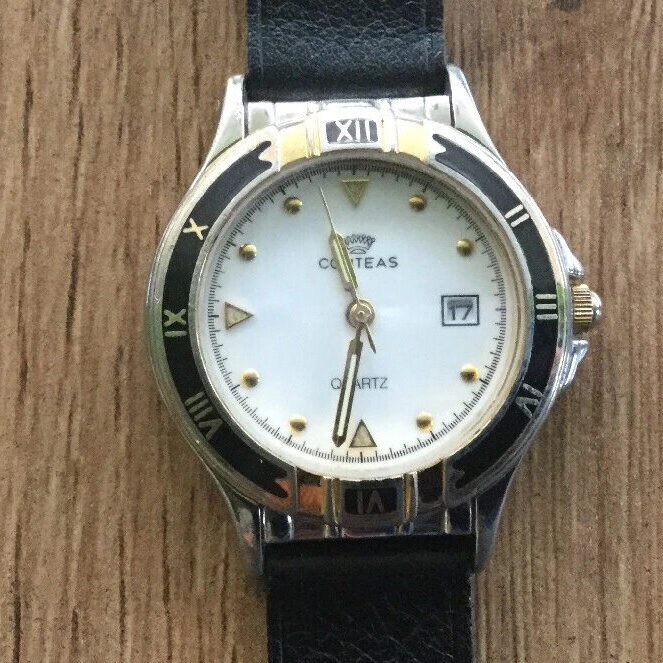
The latest Conteas watches documented so far appear to date from the early 1990s.
Among them are small quartz models with stylistic and construction features typical of approximately 1990–1994. Their existence demonstrates that the Conteas name continued to be used after the dissolution of Casa del Cinturino in 1986.
At present, however, no document has yet established who owned, distributed or commissioned Conteas watches during this final phase.
The chronology is intriguing. Giuseppe Maschio died in 1995 and Carlo Eskenazi in 2003, while the known commercial structure associated with Casa del Cinturino had already been dissolved in 1986. Whether the later disappearance of Conteas was connected to subsequent personal or commercial events remains an hypothesis rather than a documented conclusion.
A History Still Being Reconstructed
The history of Conteas remains incomplete. What survives today is an unusual combination of physical evidence and fragmentary documentation: pocket watches, chronographs, dress watches, divers, automatic and quartz models spanning several decades; movements supplied by numerous Swiss manufacturers; and, increasingly, archival records and family testimony linking the brand to Carlo Eskenazi and the Turin watch trade.
Many questions remain unanswered. When was the Conteas name first used? Was it formally registered before the 1950s? Who commissioned the earliest watches? What happened to the brand after the dissolution of Casa del Cinturino in 1986?
These questions are now at the centre of an ongoing historical research project.
What can already be said with confidence is that the Conteas name was used on Swiss-made watches for several decades, across mechanical and quartz generations, before disappearing from the market in the 1990s.
Today, that history is being reconstructed as Conteas prepares to return to watchmaking.
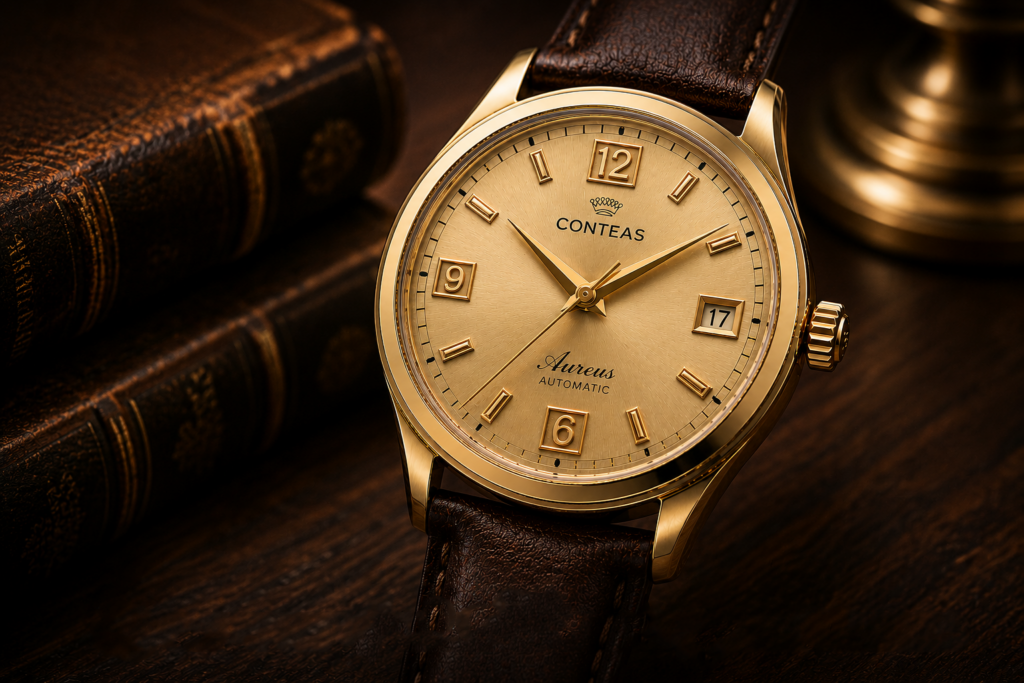
The modern collection does not seek to recreate the past or reproduce historical models. Instead, it draws inspiration from the recurring aesthetic traits visible across surviving historical examples and reinterprets them for a contemporary audience.
Designed in Italy. Powered by Swiss mechanical movements. Assembled with care and attention to detail. Every modern Conteas is designed to respect the character of the historic watches while embracing contemporary craftsmanship.
The goal is not to preserve history behind glass.
It is to continue it.