
Why 38 mm Never Went Out of Style
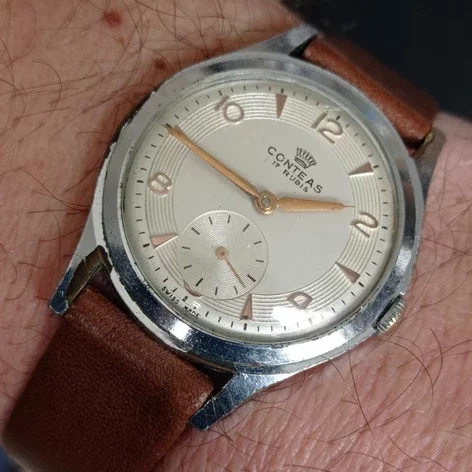
For much of the 1940s and 1950s, a gentleman’s wristwatch was considerably smaller than those worn today. Diameters between 32 and 36 mm were common, and even chronographs rarely reached modern proportions. What mattered was balance: the relationship between the dial, case, lugs and wrist. In the 1960s, watches gradually gained more presence as sports watches, diving watches and chronographs became increasingly important, but restraint remained the rule. Size served the design, not the other way around.
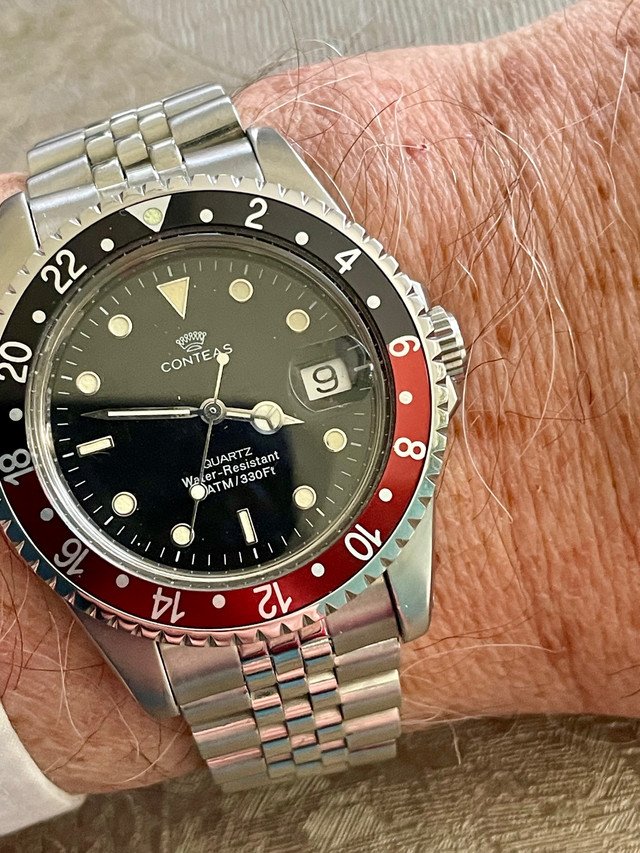
That changed from the late 1990s and especially during the 2000s. Watches became larger, with 42 and 44 mm cases appearing across almost every category. Yet classic sizes never disappeared. Vintage collectors continued to wear them, and in recent years many watch enthusiasts have returned to diameters between 36 and 39 mm. The reason is simple: these proportions are comfortable, versatile and allow the design of the watch to speak before its size does.
This is where 38 mm has found its place. It is not truly a vintage size — many watches of the 1940s and 1950s were smaller — but a modern interpretation of classical proportions. A well-designed 38 mm case offers enough space for an open, legible dial while remaining compact on the wrist. It can have presence without becoming oversized and elegance without feeling fragile.
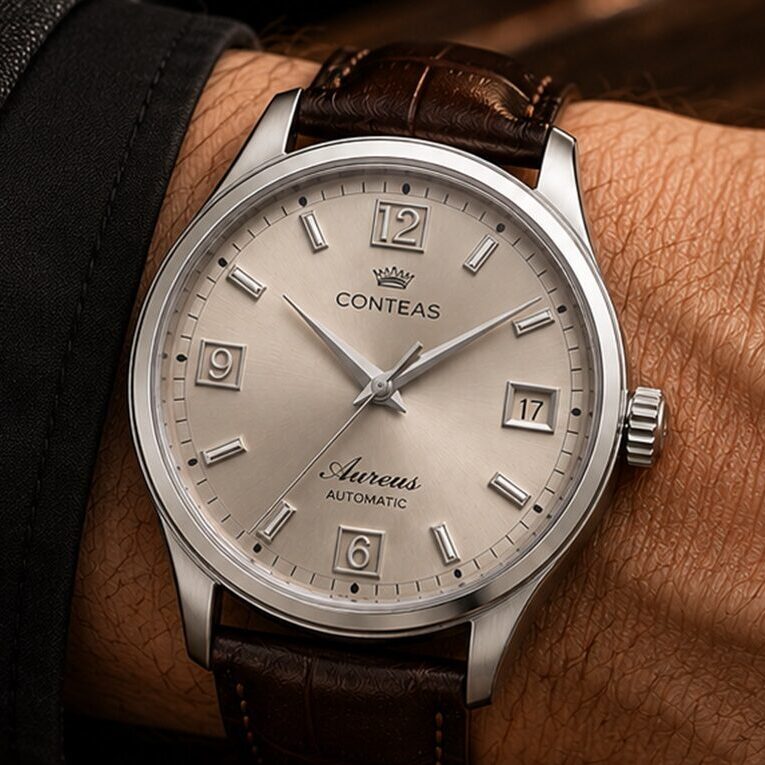
That is why the Conteas Aureus measures 38 mm. We did not want to reproduce a vintage watch exactly, nor follow the larger dimensions that dominated watchmaking for many years. With a 38 mm diameter and a 45.5 mm lug-to-lug length, Aureus was designed around the balance of the complete watch: dial, case and wrist. It is large enough to feel contemporary and restrained enough to remain classical. For Aureus, 38 mm was not chosen because smaller watches are fashionable again. It was chosen because the design did not need to be larger.