
Pocket Watches Before the Wristwatch
Long before the wristwatch became the natural place to read the time, the watch belonged in a pocket. By the beginning of the twentieth century, Swiss pocket watches had evolved from prestige objects into everyday instruments, produced in many different qualities and price ranges. Their large cases, clear dials and robust movements reflected a well-established culture of personal timekeeping that would coexist with the emerging wristwatch for decades.
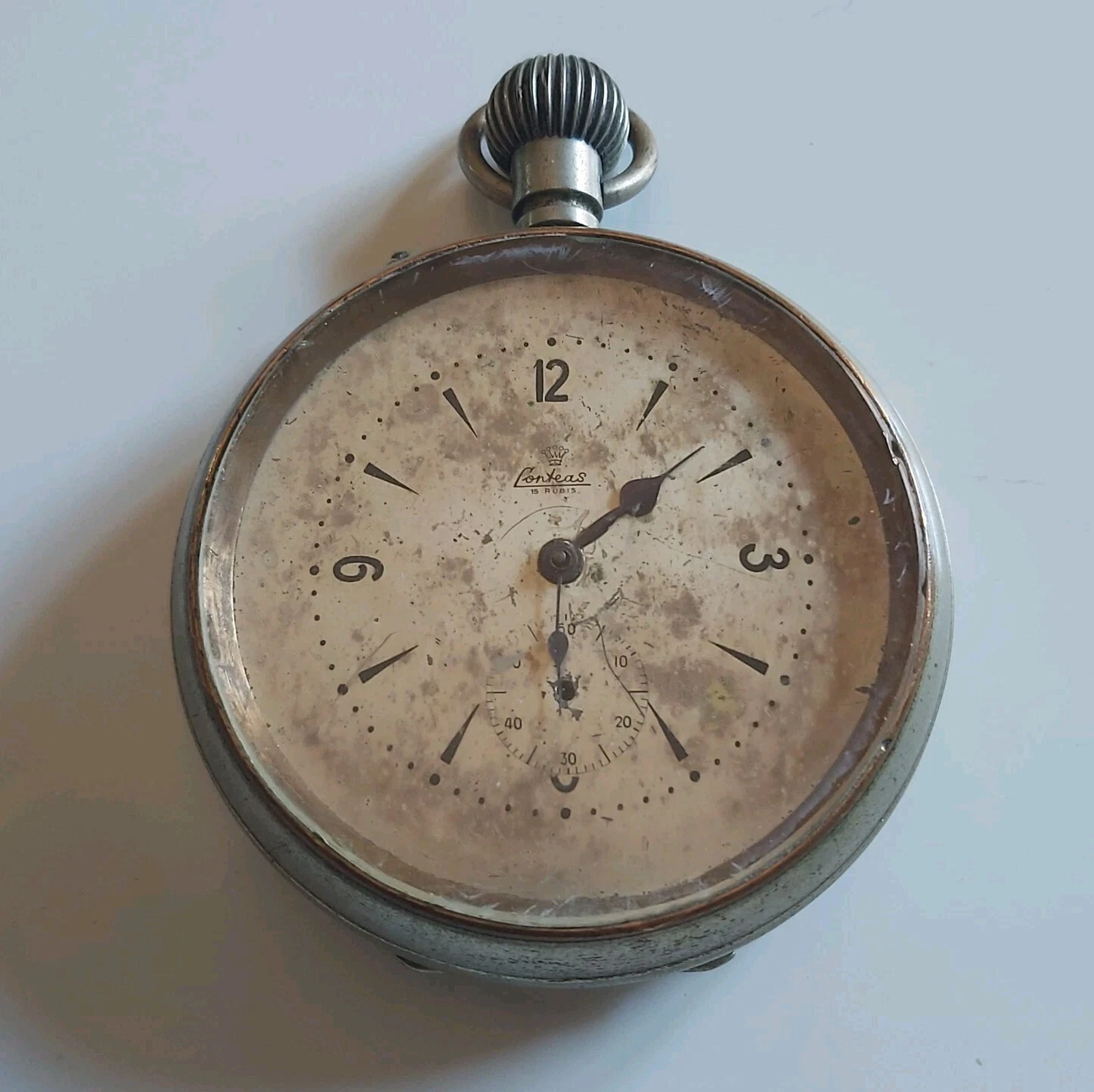
One surviving Conteas offers a glimpse into this transitional world. Measuring approximately 73–74 mm in diameter and 18 mm in thickness, it is unusually large even for a pocket watch. Its case is made from common metal and houses a large gilt movement, while the aged dial combines prominent Arabic numerals, geometric hour markers and subsidiary seconds at 6 o’clock. The inscription Conteas – 15 Rubis suggests that the jewel count was considered an important part of the watch’s identity and commercial presentation.
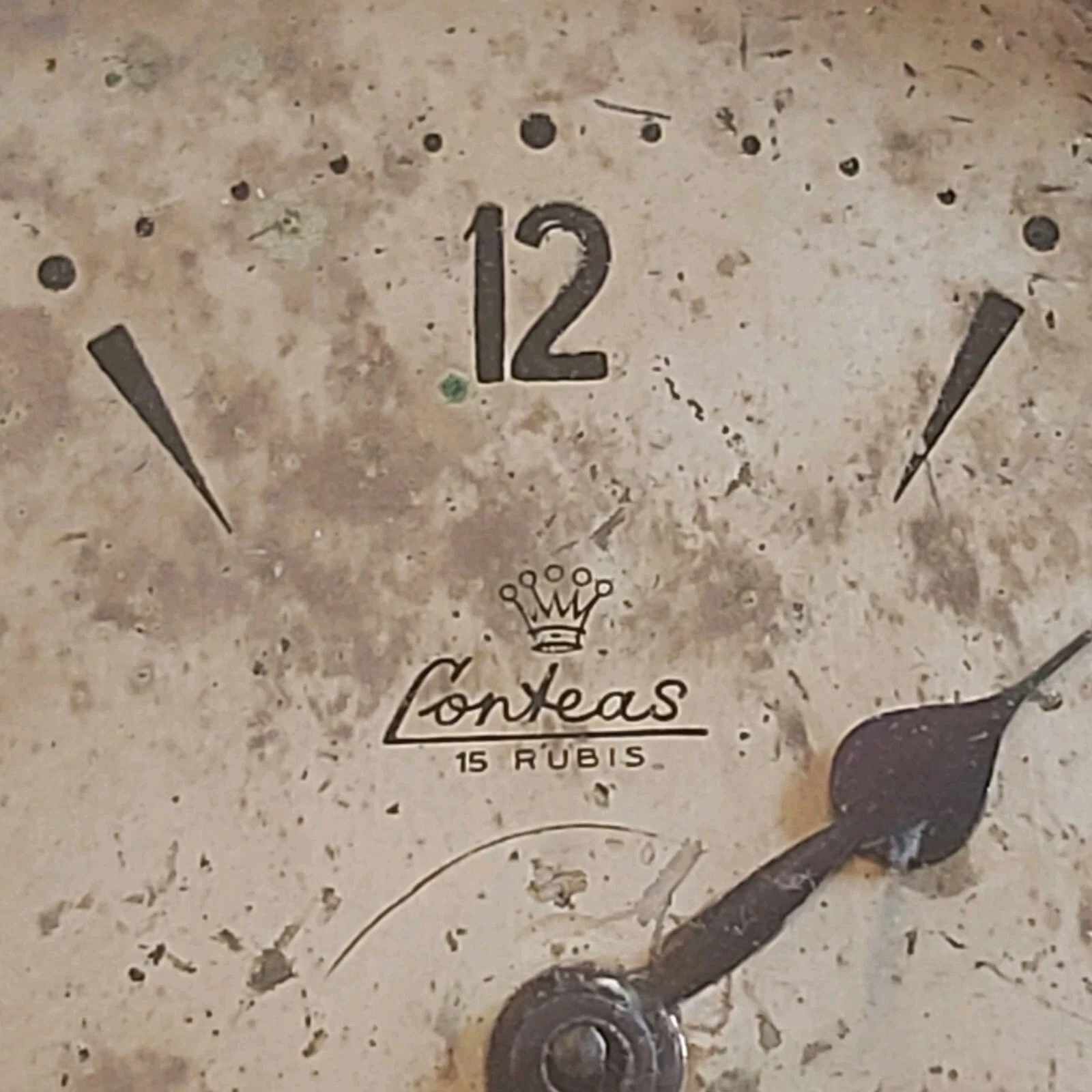
Above the Conteas signature appears an especially significant detail: a small crown. Its design differs from the seven-pointed crown later associated with the brand, but its presence shows that the relationship between the Conteas name and a crown symbol reaches back to what appears to be a very early period of the marque.
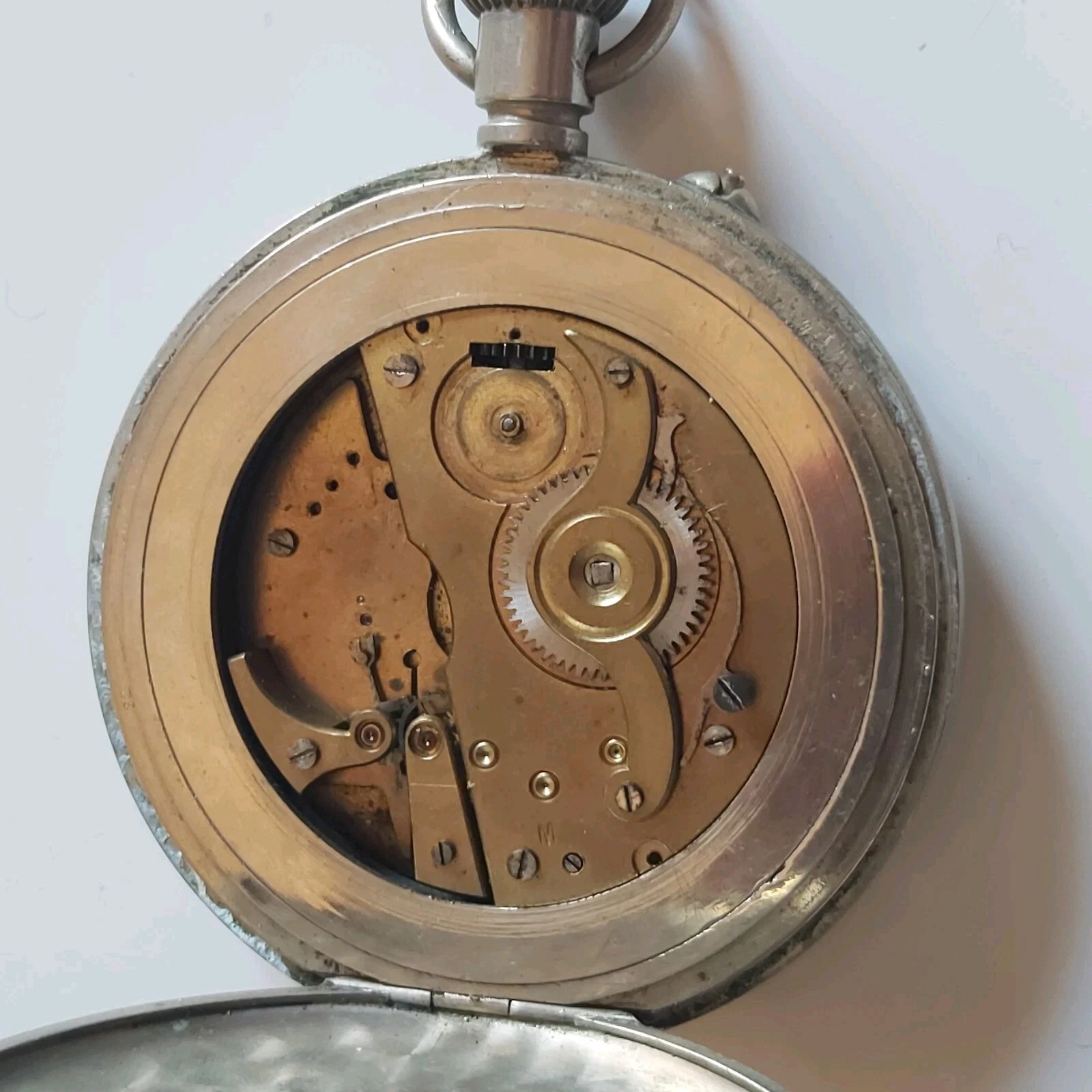
The watch also uses a lateral setting button, or pin-set system, rather than the now familiar pull-out crown. Its construction, dial architecture and Roskopf-derived movement belong to a technical tradition strongly associated with the early decades of the twentieth century.
This does not, however, necessarily establish the date at which the complete watch was assembled or first sold under the Conteas name. Recent historical research has reopened the question of the brand’s origins, and it is possible that an older movement or components were used in a watch assembled at a later date. The precise dating of this example therefore remains unresolved.
By then, wristwatches were already becoming increasingly common, but pocket watches did not disappear overnight.
The two forms continued to coexist as habits and fashions changed.
This large Conteas preserves the visual and mechanical language of an earlier pocket-watch tradition. Whether it was assembled during that period or later remains an open question. What is certain is that it already carries two elements that would remain central to Conteas: the Conteas name and the crown above it.